FTL vs. PTL: What’s the difference and when to use each

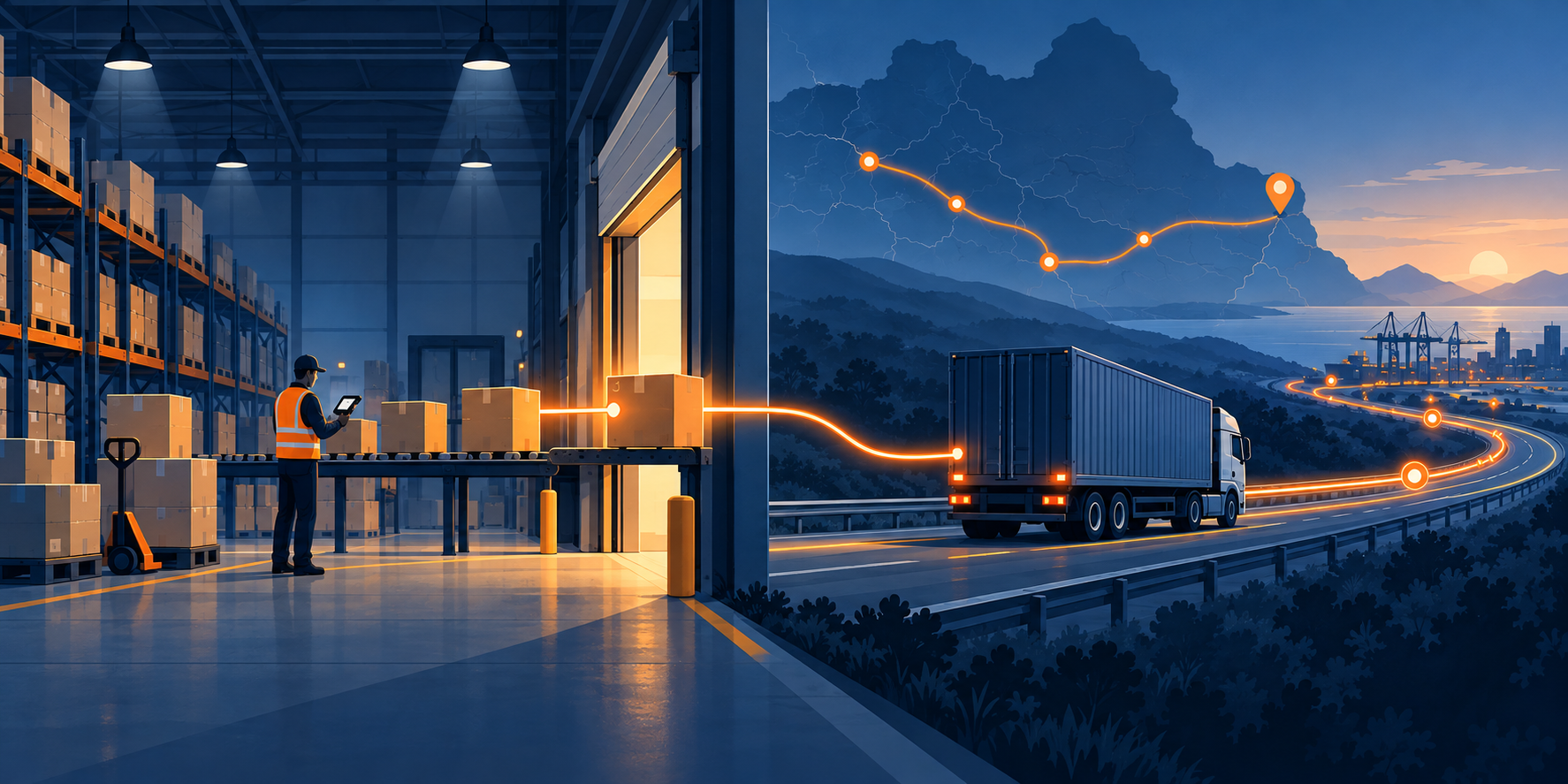
A taxi will take you wherever you need to go 24/7 for one fixed price for the entire car. A shared ride, on the other hand, will travel for less and make several stops along the way. While there are some additional nuances to FTL and PTL shipping, they function generally in the same manner.
We provide detailed explanations of both types of freight, compare them side by side, and discuss the different ways to decide which type of freight the shipment should be.
What is FTL (full truck load)?
FTL means one shipper gets the whole truck. The vehicle is booked for your goods alone and typically runs straight from pickup to delivery, with no other customers’ freight on board. You choose the vehicle type, and the price covers the truck and the trip, so you pay for the full capacity whether you use it or not.
That makes FTL a natural fit for large consignments, time-sensitive loads, and goods that shouldn’t be handled more than necessary. Manufacturers, distributors, and large retailers use it constantly, which is part of why industry coverage describes India’s road freight as dominated by FTL, with PTL gaining traction.
What is PTL (part truck load)?
Partial Truckload (PTL) Service: In PTL several shippers use the same truck for their consignments. The shipper books only part of the truck for the weight or space that he requires to send his goods. In PTL practice, goods are collected by the operator and consolidated at a hub or along the route and are delivered one by one. It takes longer to reach its destination and is much more labor-intensive than FTL.
PTL services cater to customers whose consignments are too large to be sent through a courier service but too small to warrant a full truck load. In most parts of the world PTL and LTL are interchangeably used to refer to such services; however, in some geographies PTL is offered as a different service from LTL. Hence, it is advisable to verify with the service provider what they mean by PTL.
FTL vs. PTL at a glance
|
FTL |
PTL |
|
|
How the truck is used |
Dedicated to one shipper |
Shared by several shippers |
|
How you pay |
Per truck and trip |
Per weight or space used |
|
Transit time |
Usually faster and direct |
Usually slower, via consolidation |
|
Handling |
Loaded once, unloaded at destination |
May be handled at hubs along the way |
|
Control |
You choose the vehicle and timing |
The provider plans the shared load |
|
Best for |
Large, urgent, or delicate loads |
Smaller, regular, flexible loads |
How pricing works and how to compare
The way FTL and PTL are priced varies greatly. FTL is mostly priced by vehicle type, by distance, and by lane, while PTL is mostly priced by chargeable weight or volume, by distance, and by the route taken through their own network of roads.
The right way to compare is to find the break-even point where the sum of all part-load charges equals the price for a full truck. Using some random numbers, let’s say a full truck in your desired lane would cost ₹30,000. Now, if a provider charges ₹6 per kg for part loads, the breakeven would be at 5,000 kg. Below that weight, PTL would be the cheaper option, whereas from that weight on, FTL would start to be the more competitive option, often even with faster transport and less handling. Minimum charges and handling fees must, of course, also be factored into the quotes.
The same logic shows up in other markets. Shopify’s guide to LTL freight notes that density usually does most of the work in setting the price and that you can estimate it before you book. In practice, that means getting quotes on both weight and volume, because a light, bulky load can be priced very differently from a dense one. Either way, work out your own break-even for each lane instead of borrowing someone else’s number.
When to choose FTL
FTL is usually the better choice when:
- Your load fills most of the vehicle by weight or volume.
- The delivery is urgent or has a tight window.
- The goods are fragile, high-value, or need careful handling.
- There’s one pickup point and one or a few drop points.
- You ship the same lane regularly at volume, which makes dedicated vehicles easy to plan.
As an illustration, a manufacturer sending 18 tonnes of finished goods to a distributor’s warehouse is an easy FTL case.
One caution: some “FTL” bookings are really half-full trucks, because the vehicle wasn’t matched to the load. It’s one of the problems we covered in 5 Common Dispatch Problems in Trucking (and how to fix them). Right-sizing the vehicle often saves more than switching modes.
When to choose PTL
PTL is usually the better choice when:
- Your consignments are small or mid-sized and would leave a full truck mostly empty.
- You ship regularly in modest volumes, and waiting to fill a truck would delay orders or tie up cash in stock.
- You’re making several small deliveries to different destinations.
- Your delivery windows are flexible enough to absorb an extra day in transit.
- Your goods can take shared handling, with sturdy packaging and clear labels.
A typical PTL move for a small brand would be to send 600 kg of stock to three cities. The biggest factor to consider is the handling of your goods. Often your goods will move more than once; therefore, strong cartons are used, and all packages are labeled with the consignee name and LR number. Furthermore, breakable items must be excluded from combined transport wherever possible.
The options in between
The choice isn’t always binary. A few middle routes are worth knowing.
Multi-drop FTL. One truck serves several of your own customers along a route. You keep the control of a dedicated vehicle and spread its cost across drops.
Consolidating your own orders. Holding orders for a day to fill a truck can move you from PTL to FTL economics if your customers can wait.
Consolidation by others. Freight forwarders and PTL providers pool loads from many shippers, which is how smaller consignments get truck economics.
If your volumes sit near the break-even, test both on one lane for a month and compare cost, transit time, and damage side by side.
The paperwork differs too
Each consignment needs its own paperwork either way, with its own LR and, above the value limit, its own e-way bill. The difference is how many consignments share a vehicle. With PTL, one truck carries consignments from several shippers, so the transporter may combine the e-way bills into a consolidated one for the vehicle. With FTL, the vehicle usually carries one shipper’s goods to one place. We went through each document in The documents that travel with every truck in India.
Common mistakes when choosing
- Defaulting to FTL for everything. Paying for empty space is the most common way to overspend on freight.
- Using PTL for time-critical stock. Consolidation adds days, and a late replenishment can cost more than the freight saved.
- Comparing quotes on price alone. A cheaper part-load rate with higher damage or longer transit may not be cheaper in the end.
- Skipping the packaging check. PTL goods travel through more hands, and weak packaging shows up as claims.
- Never revisiting the choice. Volumes change, and the right mode for a lane last year may not be right now.
A quick decision checklist
For any shipment, ask five questions:
- How much of a truck would it fill?
- How urgent is the delivery?
- How fragile or valuable are the goods?
- How many drop points are there?
- What does the break-even say for this lane?
If the first three point the same way, the answer is usually clear. If they disagree, the break-even calculation and the number of drops usually settle it.
Making the break-even a habit
We estimate the break-even for a single lane within about 10 minutes. Calculating for all lanes, for every change in weights and rates on a weekly basis, stops most people there. Subsequently, decisions about the mode of transport are taken on the basis of habit and what was last booked.
Repeat decisions are easily managed with software. A transport management system such as our own would hold details on the weight and volume of individual loads and compare prices for full truck loads and part loads alike. It would also manage single-trip records for all loads traveling, whether alone or sharing a truck. This type of system would also be beneficial for companies that consolidate part loads for a number of their customers, such as freight forwarders, and we also offer a freight forwarding software package called Libera designed specifically for this type of user.
Frequently asked questions
What is the difference between FTL and PTL?
FTL dedicates a whole truck to one shipper and is priced per truck. PTL shares a truck between several shippers, each paying for the weight or space they use.
Is PTL the same as LTL?
In India the two terms are often used for the same idea: a shipment that shares a truck with others and pays for the space it uses. Some markets use “partial truckload” for a different service, so confirm what a provider means.
When is PTL cheaper than FTL?
When your consignment is small enough that the part-load charges add up to less than a full truck’s price on the same lane.
Can I book FTL for a half-full truck?
Yes. You pay for the whole truck, so it makes sense when urgency, fragility or direct delivery matters more than the unused space.